
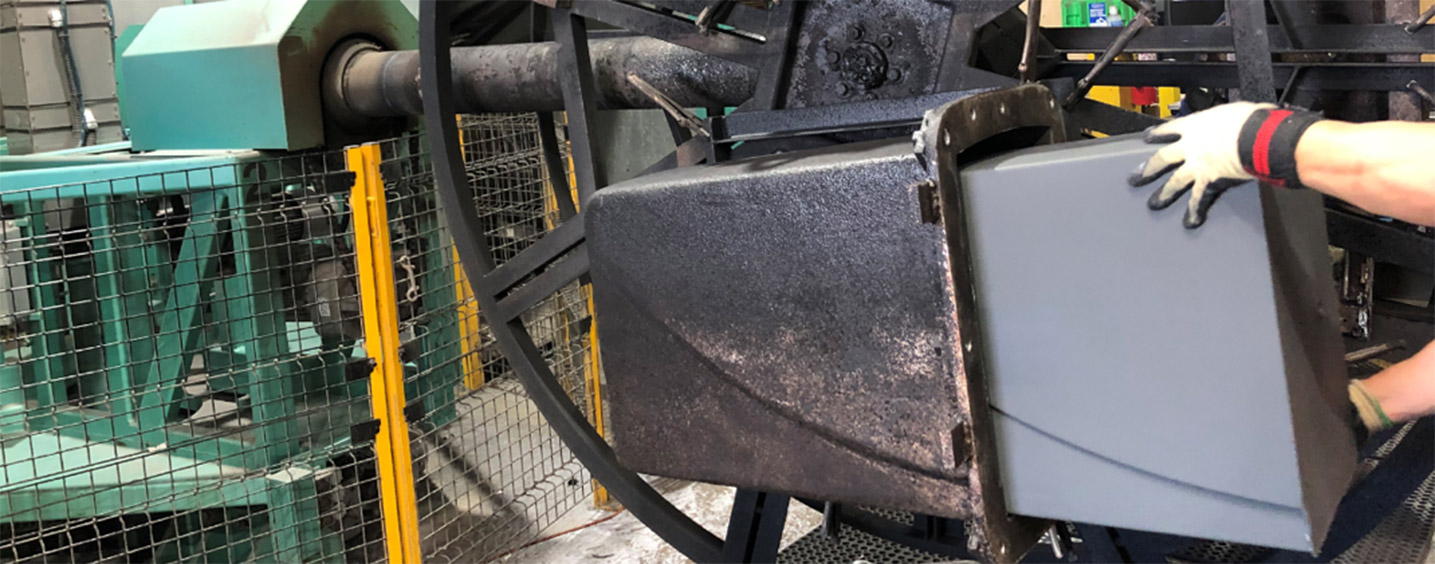
Rotational Molding is a versatile process with low tooling costs and design flexibility
What is Rotational Molding?
Rotational molding is a versatile process which uses low cost tooling and engineered resins to produce functional, seamless, robust, hollow plastic products in low to high volume quantities.
The process’ versatility allows design and production flexibility, allowing you to produce multifaceted shapes with undercuts, ribbing structures, textures, colors, molded-in threaded inserts, colored graphics and polyurethane foam-filled, double wall sections.
The rotational molding process creates light weight parts that have an inherent strength that you will not find in other thermoforming processes. This includes a higher material concentration in corners and a seamless uniform structure.
Advantages of Rotational Molding:
- Low tooling cost and quick lead times
- Parts have good impact strength
- Versatile design features
- Suited to short and long production runs, 50 – 15,000 pieces.
- No seams and stress free corners
- Wall thickness can be changed at any stage of the process
- Metal inserts can be molded into plastic parts with relative ease
- Graphics can be molded into parts
- Various colors available
Advantages of Partnering with Roto Dynamics
If you are looking for a rotational molding company, our team has a reputation for being easy to work with experts in the rotational molding industry. As part of our commitment to our customers, we strive to continually improve and maintain a communicative, transparent culture. By following lean manufacturing principles and minimizing waste in the workplace, we have gained a competitive advantage which translates into customer savings and improved lead times.
Our goal is to provide customers with what they need; products on time, in full, to specification, and with uncomprimsing quality. Our estimators, designers, tool makers and production staff will coordinate with you to streamline project flow making sure that realistic expectations are set and met. Check our our Reviews.
| Advantages of Rotational Molding vs Other Plastic Processes | |||||
| Injection Molding | Blow Molding | Thermoforming | Compression Molding | Extrusion Molding | |
| Rotational Molding Advantages | Lower cost tooling | Lower cost tooling | Lower cost tooling | Hollow products can be formed | |
| Lower cost tooling maintenance | Lower cost tooling maintenance | Lower cost tooling maintenance | Single piece double wall construction is possible | Lower cost tooling maintenance | |
| Tooling is less complex to modify and make adjustments to | Tooling is less complex to modify and make adjustments to | Stress free corners | More features such as molded in inserts and graphics | Parts are stronger | |
| Tooling is less complex when molding features such as undercuts hand holds | Tooling is less complex when molding features such as undercuts hand holds | Uniform wall thickness | More complex geometry | More complex geometry | |
| Better outdoor product performance | Parts are stronger | More complex geometry | Lower operating pressure | Lower operating pressure | |
| Lower initial setup cost | More complex geometry | More features such as molded in inserts and graphics | Foam filling for insulation and buoyancy is feasible | Lower initial setup cost | |
| Lower operating pressure | Lower initial setup cost | Single piece double wall construction is possible | Foam filling for insulation and buoyancy is feasible | ||
| Larger Part size capabilities | Single piece double wall construction is possible | Foam filling for insulation and buoyancy is feasible | |||
| Lower operating pressure | |||||

Rotational Molding Tooling
Our in house tooling maintenance capabilities allow us to keep your molds running with minimal downtime. In addition to this our tooling partners are all within the vicinity.
- CNC machined tooling
- Cast Aluminum tooling
- Fabricated tooling
- Indoor Secure Storage
- In house tool maintenance

Equipment used for Custom Roto Molding
A variety of manufacturing and prototyping equipment allow us to meet your needs.
- Large format 3D Printer
- 2 Ferry Ovens
- SolidWorks
- Polyurethane Foam Filling
- High Intensity Resin Mixers
- Internal Air Temperature Monitoring
- Thermal Imaging
- Precision Resin Dispensers
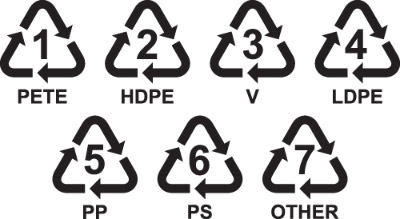
Materials offered
- LLDPE
- HDPE
- Cross-link PE (XLPE)
- Polypropylene (PP)
- Polyurethane foam fill
- Recycled Polyethylene

Quality Control
- CMM
- Low Temp. Impact Testing (ARM standard)
- Powder flow analysis
- QA work instructions
- Sample inspection process
Rotational molding, also referred to as rotomolding, is a low pressure manufacturing process used to produce durable, hollow plastic products. Plastic powdered resin is placed inside an aluminum mold, which is heated while rotating on two axes. As the resin melts, it coats the interior of the mold, forming a uniform wall thickness. The mold and part is then cooled, removed from the mold, and trimmed/ assembled. Rotational molding is ideal for tanks, enclosures, cases, and other large hollow products.
Rotational molding offers several advantages over other plastic manufacturing processes, including low tooling costs, short tooling lead times, the ability to produce both small and large hollow parts, excellent design flexibility, and consistent wall thickness. It also allows in-molded brass threaded inserts, formed plastic threads for lids, textured surfaces, in-molded colored graphics, and foam filling while generating very little material waste.
Rotational molding is used to manufacture a wide variety of products, including water tanks, medical equipment housings, agricultural products, marine components, food service equipment, playground equipment, material handling containers, industrial enclosures, and custom OEM components.
The most common material used in rotational molding is polyethylene (PE), including linear low-density polyethylene (LLDPE), high-density polyethylene (HDPE), and cross-linked polyethylene (XLPE). Depending on the application, materials such as nylon, polypropylene, and specialty resins may also be available. Material selection depends on the required strength, chemical resistance, UV stability, temperature performance, and regulatory requirements such as UL94HB.
Rotational molding is well suited for both small and very large plastic parts. At Roto Dynamics, we manufacture components ranging from a few inches to several feet in size, depending on the design and production requirements. If you’re unsure whether your part fits within our capabilities, our engineering team can review your design and recommend the best manufacturing approach.
Rotational molding is typically the most cost-effective manufacturing process for low- to medium-volume production, where high tooling costs associated with injection molding cannot be justified. We typically produce anywhere from 50 to 20,000 units per run.
Rotational molding offers significant design flexibility. Features such as molded-in inserts, threads, double walls, ribs, textured surfaces, molded logos, foam-filled cavities, and complex hollow geometries can often be incorporated directly into the part. Designing these features into the mold can reduce assembly time, improve durability, and lower overall manufacturing costs.
Quality begins long before production starts. Our engineering team reviews every design for manufacturability, and our production team follows documented process controls throughout manufacturing. We perform dimensional inspections, leak testing when required, and final quality checks to verify that every part meets customer specifications before shipment.
Yes. In addition to rotational molding, we provide a full range of secondary operations, including CNC machining, drilling, trimming, insert installation, spin welding, assembly, leak testing, labeling, packaging, and logistics. Providing these services under one roof helps reduce lead times, improve quality, and simplify your supply chain.
Absolutely. Our engineering team performs Design for Manufacturing (DFM) reviews to optimize your product for rotational molding. We evaluate wall thickness, draft angles, parting lines, inserts, secondary operations, material selection, and tooling requirements to improve manufacturability, reduce production costs, and enhance product performance before tooling begins.