Roto Molding Products

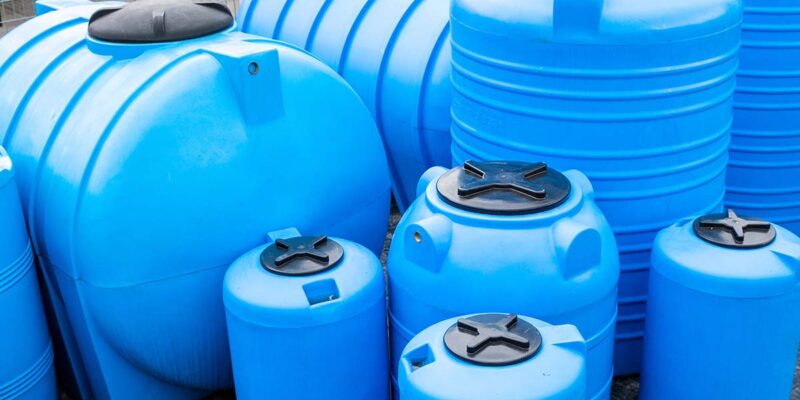
Plastic water tanks play a vital role in society, serving residential, industrial, agricultural, medical, transportation, and even aerospace applications.
At Roto Dynamics, we design and manufacture durable custom plastic water tanks using advanced rotational molding (rotomolding) techniques.
Every rotomolded water tank is designed and manufactured to ensure consistent wall thickness and for strength and long term performance, whether you need 50 custom made plastic water tanks prototypes or a 10,000.

This guide covers the various types of materials we use, the rotational molding manufacturing process, the end-to-end services we provide, and how we solve the most common issues found in the plastic water tank industry. If you are experiencing challenges with your roto moulded water tank manufacturer this article may help you.

Custom Plastic Water Tank Applications

Roto Dynamics Inc. supplies custom rotomolded water tanks to clients with a wide range of requirements. Some projects require molded in inserts, removable threaded lids, in molded graphics and spinwelded threads. Our customers include OEMs and small to mid size manufacturers who depend on consistent, repeatable quality. Some applications for our rotmolded water tanks include:

  • Residential and commercial water storage systems
  • Agricultural irrigation tanks and hoppers
  • Chemical processing and wastewater management
  • Construction and industrial equipment tanks
  • Medical, pharmaceutical, and laboratory systems
  • Transportation, marine, and RV fresh water tanks
  • Aerospace and defense fluid management systems

Whatever your application may be, Roto Dynamics can provide design and manufacturing support to meet your custom water tank critical to function requirements.
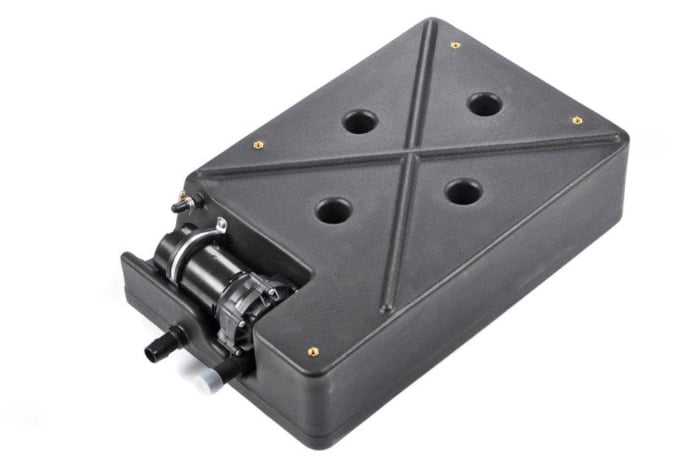
Lamborghini Charge Cooler Tank


Information about Plastic Tanks

Plastic Resin Options for Custom Rotomolded Water Tanks

Choosing the right material is critical for tank performance, chemical resistance, food-safety compliance, and environmental durability. As an experienced plastic tank manufacturer, we produce custom plastic water tanks using a wide range of resins tailored to the needs of each application. For more detail on our resin options, visit our resin options page.

1. FDA-Compliant LLDPE (Linear Low-Density Polyethylene)

  • Most common resin for custom plastic water tanks
  • Excellent low temperature impact resistance 
  • UV resistance for prolonged sunlight exposure
  • Safe for potable water and food-contact applications (when specified)
  • Cost-effective and durable for large and small tanks

2. FDA HDPE (High-Density Polyethylene)

  • Higher stiffness and strength than LLDPE
  • Suitable for larger tank designs
  • Excellent for rectangular or thin-wall rotomolded water tank designs

3. Polypropylene (PP)

  • High heat resistance for elevated temperature environments
  • Superior chemical resistance
  • Used for tanks exposed to higher service temperatures and certain chemicals.

4. XLPE (Cross-Linked Polyethylene)

  • Excellent impact resistance, chemically resistance, and heat resistance
  • Ideal for industrial tanks and high-stress environments
  • Superior crack resistance and structural integrity
  • Commonly selected for heavy-duty custom rotomold tanks with long service life requirements

5. PVDF (Polyvinylidene Fluoride) for Aerospace & High-Performance Needs

  • Used for aircraft, defense, and ultra-corrosive environments
  • Excellent flame resistance and low flammability
  • Exceptional chemical and thermal stability
  • When weight, performance, and reliability matter, PVDF is unmatched for critical custom made plastic water tanks

Our design team collaborates closely with plastic resin experts to recommend the optimal plastic resin for your rotational molding water tank project. Our goal is to balance cost, performance and regulatory requirements to ensure long term results.

Our Rotational Molding Manufacturing Process for Plastic Water Tanks

We produce custom rotomolded water tanks using the rotational molding process. This is an ideal process for manufacturing large, seamless, stress-free hollow parts. Rotomolding allows us to manufacture a wide range of roto mould water tank designs, from simple cylindrical cone bottom tanks to interlocking modular tanks with multiple sub assembly components.

How Rotational Molding Works
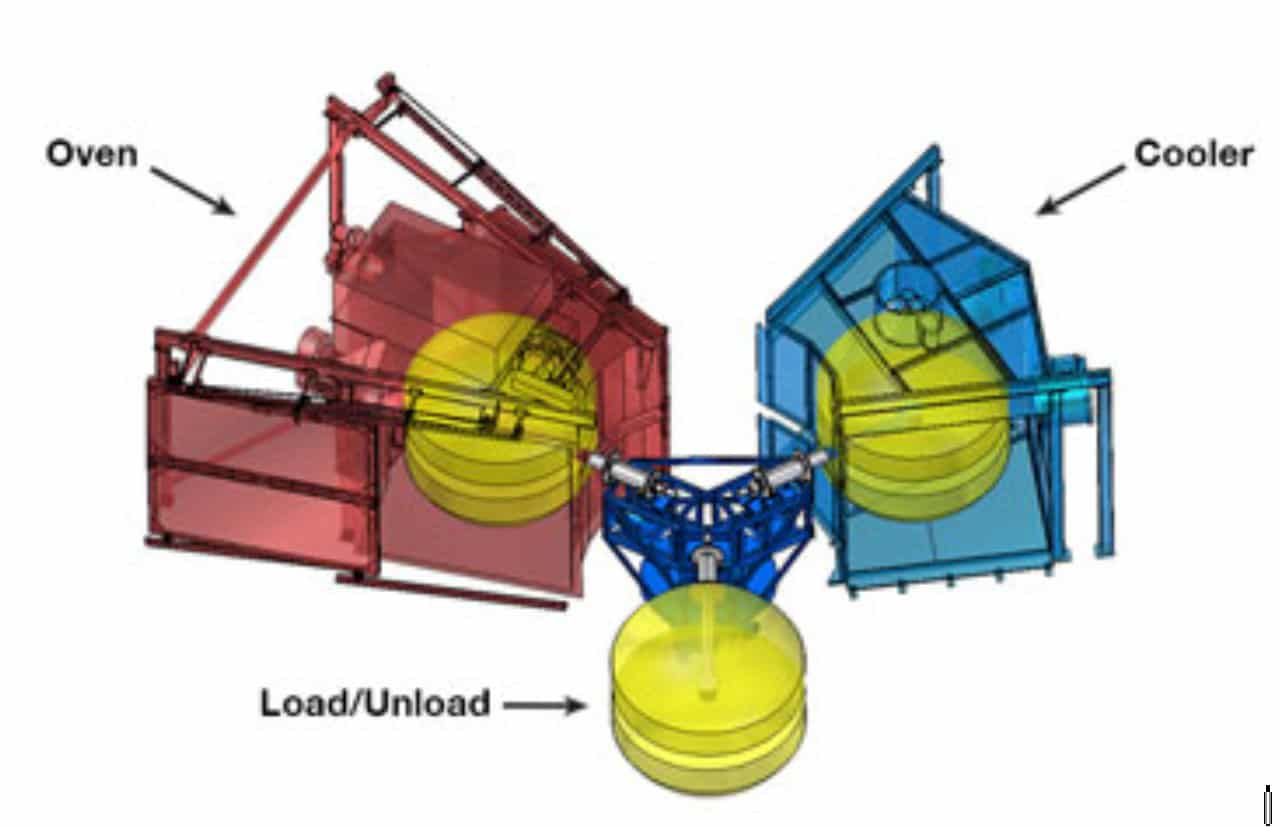
 

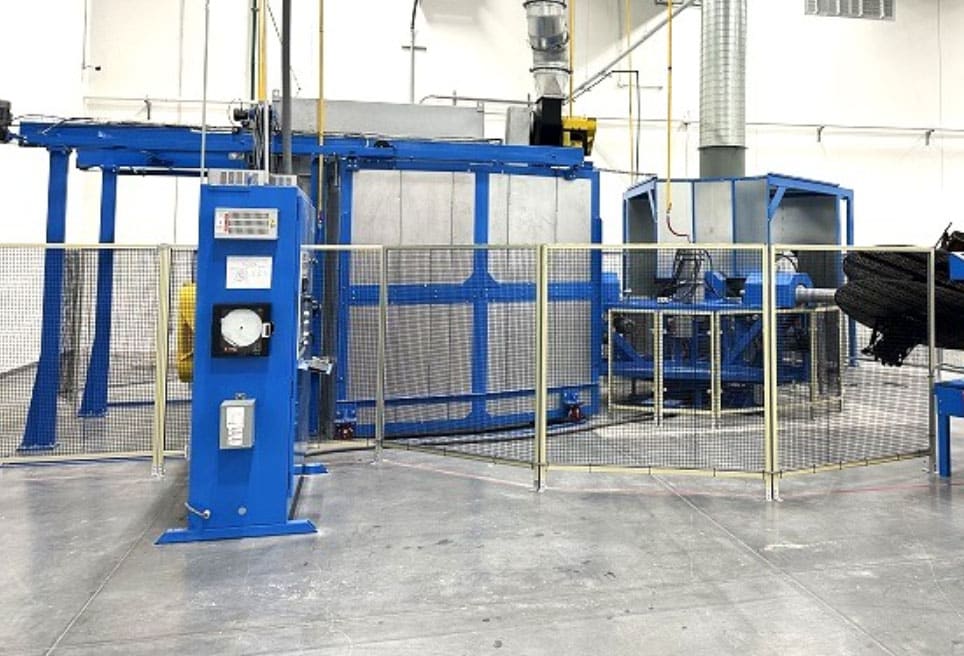
rotational molding machine
Image reference: Ferry Industries

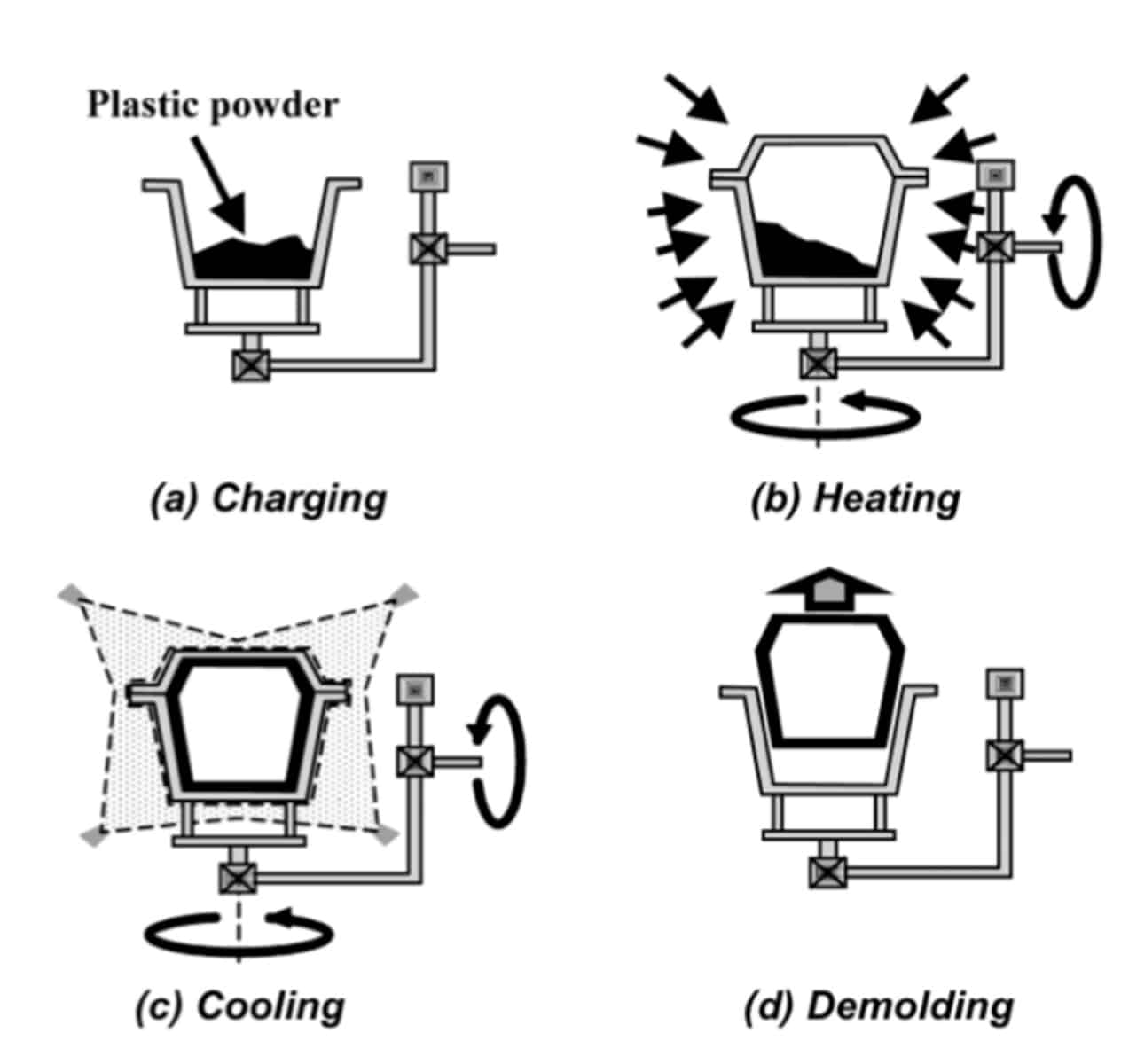
rotational


Rotational Molding Technology
Image Reference: “Rotational Molding Technology” by R.J Crawford and J.I Throne

1. Load Plastic Resin Into the Mold

Load/ Unload Bay – Powdered plastic resin is placed inside an aluminum or steel mold. Our mold making partners carefully design and build 3 types of tooling to meet your project requirements (fabricated, cast and CNC machined).

 Load Plastic Resin Into the Mold

 2. Heating & Rotation

Oven – The mold rotates on two axes inside an oven, melting the resin so it coats the interior surface of the mold evenly forming a seamless tank. This biaxial rotation creates a wall thickness that is consistent. This is how custom plastic water tanks are formed.

Heating and Rotation in Rotomolding

3. Cooling & Solidification

The mold moves into the cooling chamber where the mold is gradually cooled with mist and air. Controlled cooling helps minimize warping and internal stress, especially in larger rotomolded water tank designs.

Cooling & Solidification

4. Demolding & Finishing

Load/ Unload Bay – The tank is removed from the mold and later trimmed and processed through secondary operations such as machining, fitting installation, leak-testing, and assembly. Explore our surface finishing and graphics options as some of these can also be incorporated into plastic tank designs.

Demolding & Finishing

Advantages of using the Rotational Molding process for Custom Water Tanks

  • No weld lines or seams in the main tank body
  • Consistent wall thickness across the tank
  • High durability and impact resistance
  • Undercuts and handles can be incorporated into a design
  • Cost-effective tooling for both low and high volumes
  • Excellent choice for custom made plastic water tanks 

To learn more about how rotomolding works in detail, visit our rotational molding process page.

Full-Service Manufacturing: From Design to Delivery

Roto Dynamics supports customers at every stage of the product life cycle. If you are looking to manufacture a rotomolded water tank—we provide design feedback, tooling, production, and logistics support. Explore our full list of services on our services page.

Design for Manufacturing (DFM)

Our product development and design team will review your designs to ensure:

  • Rotational molding feasibility
  • Tooling feasibility
  • Critical to function requirements (CTF’s)
  • Critical to quality requirements (CTQ’s)
  • Parting line locations and draft angles
  • Optimal placement of fittings, inserts, and vents.

When needed, we also provide prototyping services to validate form, fit, and function before committing to full-scale production.

Tooling Design & Machining

At Roto Dynamics we provide our customers with confidence that their tooling is being manufactured with efficiency, accuracy and scheduling control. While we specialize in the design and production of rotomolded products, we also collaborate closely with a select group of toolmakers to provide industry leading tooling solutions:

  • Cast aluminum molds
  • CNC machined molds and fixtures
  • Fabricated aluminum molds and fixtures

Learn more about tooling on our mold making, CNC machined tooling, and
fabricated tooling pages.

First Article Inspection (FAI)

Before production release, we:

  • Inspect critical dimensions 
  • Perform leak and pressure tests as required
  • Confirm functional, cosmetic, and aesthetic requirements
  • Provide detailed First Article Inspection reports

Our quality control program is designed to ensure consistent, repeatable performance for every custom plastic water tank.

Production & Assembly

Once approved, we move into full-scale rotational molding production. Our capabilities include:

  • High- and low-volume rotational molding  production for custom rotomolded water tanks
  • Machining of openings, and precision interfaces
  • Foam filling for structural reinforcement and insulation – see our foam filling services
  • Product assembly and integration – described on our product assembly
    and assembly pages
  • Hardware, insert, and fitting installation
  • Packaging and assembly of multi-component tank systems

Logistics, Warehousing & Fulfillment

We offer flexible logistics solutions tailored to your supply chain. Our logistics and warehousing services include:

  • Domestic truck load and less than truck load (LTL)  services.
  • Kanban stocking and vendor managed inventory (VMI)
  • Just-in-time (JIT) delivery programs
  • Custom packaging solutions for finished tank systems

Common Water Tank Issues & How We Resolve Them

Even well-designed tanks can experience manufacturing challenges if not produced correctly. Below are common issues seen in plastic water tank manufacturing—and how Roto Dynamics prevents and solves them using robust rotational molding and quality-control practices. If you are facing challenges with your current supplier, Roto Dynamics would be happy to provide input at no charge. 

1. Holes on the Parting Line

Common Causes:

  • Poor venting of the mold
  • Dirty or worn flanges
  • Inadequate mold clamping
  • Improperly pulverized resin

How We Solve It:

  • Proper vent placement and sizing
  • Documented flange cleaning and inspection processes or rematch parting lines
  • Corrected mold alignment and optimized clamping strategy
  • Incoming inspection of plastic resins

Our quality assurance processes ensure clean parting lines with zero porosity, even for complex rotomolded water tank designs.

2. Inserts Bulging or Protruding Through the Tank Surface

Common Causes:

  • Inserts not spring loaded or improperly fastened
  • Tank wall shrinking away during cooling
  • Insert movement during molding
  • Incorrect insert design or plastic shrink expectations

How We Solve It:

  • Use of spring loaded insert retainers to keep inserts flush
  • Optimized cooling cycles to reduce shrink stress

Our insert design and installation process guarantees flat, secure inserts in your custom rotomolded tanks.

3. Warping, Distortion, and Dimensional Deviation

Common Causes:

  • Wall thickness variation
  • Inadequate venting of the mold
  • Improper cooling methods 
  • Undercured plastic

How We Solve It:

  • Check rotation ratios, minimize hotspots
  • Ensure vent is of a sufficient diameter and is not blocked
  • Controlled and slow cooling
  • Oven cycle must be sufficient  

4. Leaks Around Fittings or Threads

Common Causes:

  • Insufficient material flow around inserts
  • Lack of heat transfer through insert resulting in thin spots
  • Design feature which restricts the flow of resin

Our Fix:

  • Use a resin with a higher melt flow index
  • Ensure sufficient heat is being applied to the area in question
  • Ensure there is sufficient clearance for resin to flow around the feature
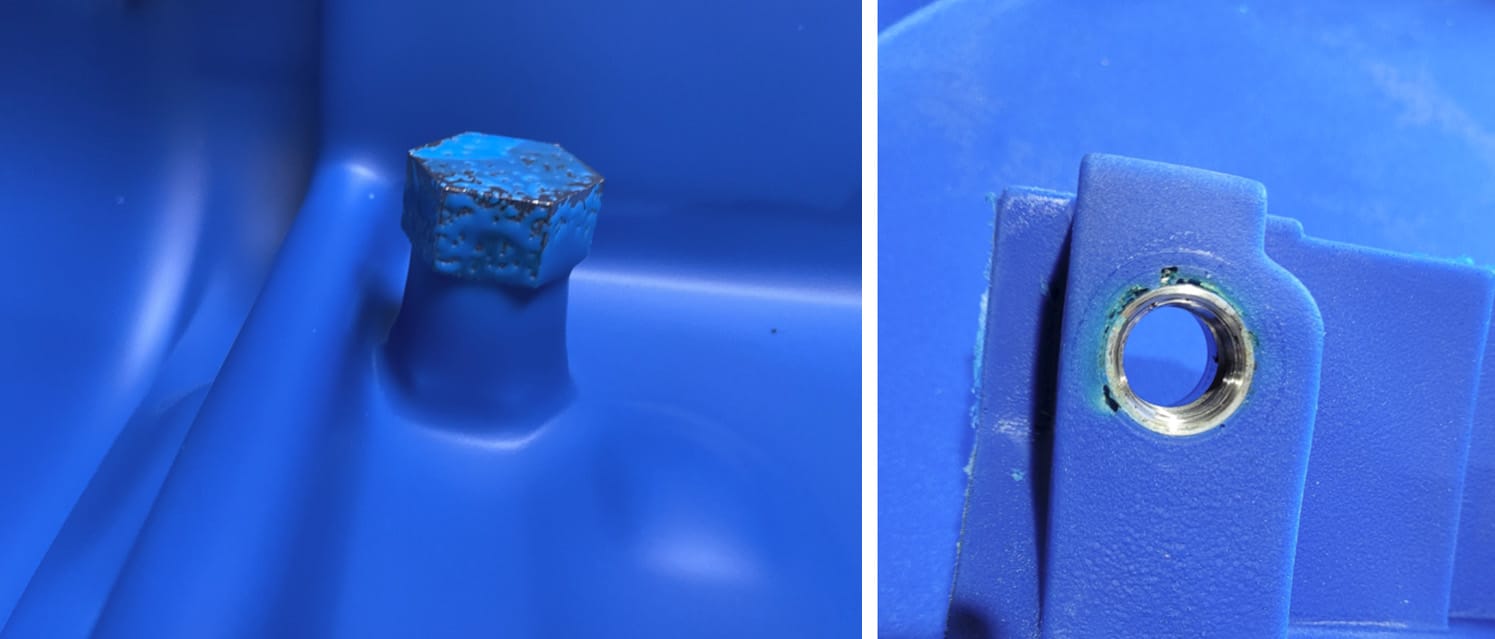
Leaks Around Fittings or Threads


5. Surface Roughness, Pinholes, or Voids

Common Causes:

  • Moisture in resin or inadequate resin storage conditions
  • Incorrect oven cycle or temperature profile
  • Resin contamination or foreign particulates
  • Porosity in mold casting

Our Solutions:

  • Store resin in a dry environment and seal all packaging
  • Ensure part is fully cured
  • Carry out incoming inspection procedures when receiving resin

Surface Roughness, Pinholes, or Voids

Your Partner for High-Quality Custom Plastic Water Tanks

If you need custom, durable, FDA-compliant, industrial, or aerospace-grade custom plastic water tanks, our design and manufacturing teams are ready to help. From concept to production, we work with you to engineer a rotomolded water tank that meets your exact requirements for performance and cost. To start a new custom water tank project or to transfer an existing tank project to a new plastic tank manufacturer, you can submit your CAD files and specifications through our
request a quote page.

Contact Roto Dynamics

Sales@rotodynamics.com
www.rotodynamics.com
714-685-0183

Frequently Asked Questions About Custom Plastic Water Tanks

What is a rotomolded water tank?

A rotomolded water tank is a hollow plastic tank manufactured using the  rotational molding process. Powdered resin is loaded into a mold,
heated while being rotated on two axes, and cooled to create a seamless, stress free tank body. This process is ideal for custom plastic water tanks with simple and complex geometry.

What materials are best for custom plastic water tanks?

The most common materials are LLDPE and HDPE, which offer excellent impact resistance as well as good UV stability. For higher temperatures or possibly aggressive chemicals, PP, XLPE, or PVDF may be recommended. The best resin for your custom plastic water tank depends on the specific application and environment.

Can you design a custom made plastic water tank to fit my equipment?

Yes. Our design team offers complete DFM support and product development  services. We can design a custom rotomolded water tank that integrates with your equipment, including mounting features, bulk head fittings, threaded inserts, and fittings.

What is the typical lead time for a new custom rotomold tank?

Lead time depends on tooling complexity and scope of the project. Tooling design and fabrication usually take 8-9 weeks. Once tooling is complete, we can manufacture a custom rotomolded tank  within days, and we offer flexible scheduling, warehousing,
and logistics to support ongoing demand.

Do you provide leak testing and quality documentation?

Yes. We provide leak testing, dimensional inspection reports, and First Article Inspection (FAI) documentation as required. Our quality control processes are designed to ensure every rotomolded water tank performs to the highest standard. 

Rotomolded Battery Boxes

Battery boxes play a crucial role in safeguarding batteries and ensuring reliable power supply in various applications. Among the different manufacturing methods available, rotomolding stands out as a preferred technique for producing durable and high-quality battery boxes. In this article, we will explore what a battery box is, delve into the process of manufacturing battery boxes through rotomolding, and highlight the key features that make these boxes indispensable in diverse industries.

Understanding Battery Boxes

What is a Battery Box?

A battery box is a protective enclosure designed to house batteries securely. It provides a reliable and safe storage solution for batteries, shielding them from external elements, impacts, and vibrations. Battery boxes are used in various industries, including automotive, marine, RV, and renewable energy.

Importance of Battery Boxes

Battery boxes offer several crucial benefits, including:

  • Protection: Battery boxes shield batteries from external impacts, moisture, and dust, ensuring their longevity and optimal performance.
  • Safety: By preventing accidental contact with battery terminals, battery boxes minimize the risk of short circuits, sparks, and electrical hazards.
  • Easy Handling: Battery boxes facilitate convenient transportation and installation of batteries, providing a secure and organized solution.

Manufacturing Battery Boxes through Rotomolding

The Rotomolding Process

Rotomolding, also known as rotational molding, is a manufacturing process that creates hollow, seamless, and durable plastic products. The steps involved in rotomolding battery boxes are:

  • Mold Preparation: A two-piece aluminum mold is prepared, ensuring it is properly cleaned and coated with a release agent.
  • Polymer Loading: Polyethylene resin, chosen for its durability and chemical resistance, is added to the mold. Various additives can be incorporated to enhance properties like UV resistance.
  • Heating and Rotating: The mold is placed inside a specialized rotomolding machine and heated as it rotates bi-axially, evenly coating the interior surface of the mold with molten plastic.
  • Cooling and Ejection: The mold is cooled, allowing the plastic to solidify. Once cooled, the mold is opened, and the finished battery box is removed.

Advantages of Rotomolded Battery Boxes

  • Seamless Construction: Rotomolding produces battery boxes without any seams or joints, eliminating weak points and enhancing overall strength.
  • Design Flexibility: Rotomolding allows for the creation of complex shapes, such as custom compartments or integrated handles, catering to specific battery sizes and requirements.
  • Durability: Rotomolded battery boxes exhibit excellent impact resistance, UV stability, and chemical resistance, ensuring long-term reliability in demanding environments.
  • Uniform Wall Thickness: The rotomolding process ensures consistent wall thickness, providing uniform strength and structural integrity throughout the battery box.

Rotomolded battery boxes Key Features of Battery Boxes

Robust Construction

Rotomolded battery boxes are known for their sturdy construction, offering superior protection against impacts, vibrations, and harsh conditions.

Secure Enclosure

Battery boxes feature a secure enclosure with reliable fastening mechanisms, ensuring batteries remain in place during transportation and operation.

Ventilation and Drainage

To prevent the build-up of potentially harmful gasses, battery boxes incorporate ventilation systems. Additionally, drainage features facilitate the removal of any accumulated moisture.

Acid Resistance

Battery boxes are designed to resist exposure to battery acid and other corrosive substances, safeguarding the surrounding environment and equipment.

Mounting Options

Battery boxes provide versatile mounting options, including brackets or integrated flanges, enabling easy installation in different settings.

Applications of Battery Boxes

Battery boxes find applications in various industries and sectors, including:

  • Automotive: Battery boxes protect automotive batteries in vehicles, ensuring reliable power supply and safety.
  • Marine: Battery boxes are essential for marine applications, safeguarding batteries from water exposure and vibrations.
  • RV and Camping: Battery boxes are used in recreational vehicles and camping setups, providing secure battery storage for powering appliances and systems.
  • Renewable Energy: Battery boxes play a vital role in renewable energy systems, storing energy generated from solar panels or wind turbines.

Maintenance and Care

Proper maintenance and care of battery boxes are essential to ensure their longevity and optimal performance. Some recommended practices include:

  • Regular Inspection: Inspect battery boxes for any signs of damage, cracks, or wear. Replace or repair damaged boxes promptly.
  • Cleaning: Clean battery boxes periodically to remove dust, dirt, and corrosive substances. Use mild cleaning agents and avoid abrasive materials.
  • Battery Maintenance: Follow proper battery maintenance procedures, including monitoring battery levels, checking connections, and ensuring proper ventilation.

Conclusion:

Rotomolded battery boxes provide essential protection and secure storage for batteries in various applications. The rotomolding manufacturing process enables the production of durable, seamless, and versatile battery boxes with features such as robust construction, secure enclosures, ventilation, and acid resistance. Roto Dynamics, is an award winning Roto Molding company located in the USA, specializing in manufacturing high-quality rotomolded battery boxes.

By choosing rotomolded battery boxes, industries can ensure the reliable performance and longevity of their batteries, ultimately supporting uninterrupted power supply and maintaining the safety of electrical systems. Whether in automotive, marine, RV, or renewable energy applications, the use of rotomolded battery boxes offers peace of mind and confidence in the protection of vital power sources.


Injection Molding

In the plastics manufacturing industry, injection molding has long been recognized as a widely used and highly efficient production method. However, there are alternative techniques available that offer distinct advantages in certain applications. In this blog post, we will explore the advantages and disadvantages of injection molding, as well as the appeal of rotational molding as an alternative. 

injection moldingAdvantages of Injection Molding

Injection molding offers numerous benefits that have contributed to its popularity in the manufacturing industry. These advantages include:

High yield output

Injection molding allows for the rapid production of large volumes of parts, making it ideal for mass production. The process is highly automated, reducing labor costs and minimizing human error.

Wide Range of Materials

Injection molding supports a vast array of materials, including thermoplastics and elastomers. This versatility enables manufacturers to meet diverse application requirements.

Precision and Complexity

Injection molding offers exceptional precision and the ability to create intricate and complex shapes. The molds can be designed with great detail, resulting in highly accurate and consistent parts.

Cost-effective

Once the initial mold is created, the cost per part decreases significantly. This cost-effectiveness makes injection molding a preferred choice for large-scale production runs.

Disadvantages of Injection Molding

While injection molding boasts numerous advantages, it also has some limitations and disadvantages to consider:

Very High Initial Tooling Costs

The creation of molds for injection molding can be expensive, especially for complex designs. The cost of the mold is a significant factor to consider, particularly for small production runs or prototypes.

Long Lead Time

The design and manufacturing of injection molds can take several weeks or even months, which can slow down the production timeline. This longer lead time may not be suitable for projects with urgent deadlines.

Design Limitations

Injection molding has certain design constraints due to the mold’s structure and the material’s flow characteristics. Complex geometries may require additional design modifications or multi-part assemblies.

Why Choose Rotational Molding over Injection Molding?

Rotational molding, also known as rotomolding, offers a compelling alternative to injection molding for specific applications. Some reasons to consider rotational molding include:

Cost-effective Tooling

Rotational molding molds are generally less expensive to produce compared to injection molding molds. This cost advantage makes rotational molding a viable option for low-volume production runs or when frequent design changes are expected.

Versatility in Size and Shape

Rotational molding allows for the creation of large, hollow, and seamless parts. It offers design freedom, enabling the production of complex geometries, including double-walled structures and intricate contours.

Enhanced Durability

Rotational molding produces parts with excellent strength and durability. The seamless construction eliminates weak points, enhancing the overall structural integrity of the finished products.

Cost Comparison: Rotational Molding vs. Injection Molding Molds

When comparing the costs of rotational molding molds to injection molding molds:

Rotational Molding Mold Costs

Rotational molding molds are generally less expensive compared to injection molding molds. This cost advantage can be significant for smaller production runs or projects with changing design requirements.

Injection Molding Mold Costs

Injection molding molds tend to be more expensive due to the complexity and precision required. However, for large-scale production runs, the lower cost per part can offset the initial mold investment.

Conclusion

Injection molding remains a highly efficient and popular manufacturing method, offering advantages such as high efficiency, a wide range of materials, precision, and cost-effectiveness. However, it is essential to consider the disadvantages, including high initial tooling costs, long lead time, and design limitations.

For specific applications, rotational molding emerges as a compelling alternative to injection molding. Rotational molding offers cost-effective tooling, versatility in size and shape, and enhanced durability. Roto Dynamics Inc. is a highly reputable rotational molding company known for its exceptional innovation and expertise in the field of rotomolding. Their commitment to excellence and continuous improvement has made them a trusted leader in their industry. Roto Dynamics Inc. stands out for several reasons, customer service, customized solutions and cutting edge technology.

When comparing the costs of rotational molding molds to injection molding molds, rotational molding molds are one tenth of the cost of injection molding molds. This cost advantage makes rotational molding a suitable choice for medium to high volume production runs or projects with frequent design changes. On the other hand, injection molding molds may have higher initial costs, but they can offset the investment through lower cost per part in large-scale production runs.

In conclusion, while injection molding remains a dominant manufacturing method, the advantages and disadvantages should be carefully weighed. For certain applications, rotational molding offers distinct benefits, including cost-effective tooling, design versatility, and enhanced durability. Ultimately, the choice between injection molding and rotational molding depends on the specific requirements of the project, and consulting with experts like Roto Dynamics can help make an informed decision.


Blow Molding

Blow molding is a widely used manufacturing technique known for its versatility and cost-effectiveness. However, alternative methods like rotational molding offer distinct advantages in certain applications. In this blog post, we will explore the advantages and disadvantages of blow molding, as well as the appeal of rotational molding as an alternative. We will also discuss how Roto Dynamics can provide a tailor made solution for your plastic manufacturing needs.

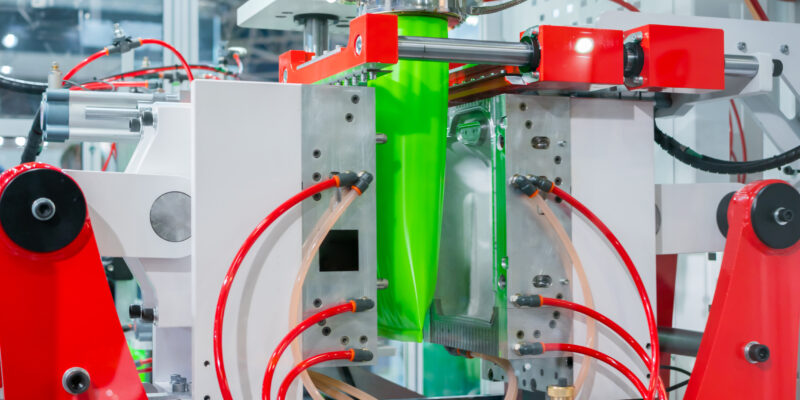
Blow MoldingAdvantages of Blow Molding

Blow molding offers several advantages that have contributed to its popularity in the manufacturing industry. These advantages include:

  1. Cost-effectiveness: Blow molding is a highly efficient and cost-effective production method, particularly for large-scale manufacturing. The process allows for the production of hollow parts, reducing material usage and overall costs.
  2. Design Flexibility: Blow molding enables the production of complex shapes and designs, including intricate contours, handles, and indentations. It offers excellent design flexibility, making it suitable for a wide range of products.
  3. Seamless Construction: Blow molding creates seamless parts, eliminating the need for additional assembly or joining processes. This seamless construction enhances the structural integrity and durability of the finished products.
  4. Wide Range of Materials: Blow molding supports various materials, including high-density polyethylene (HDPE), polypropylene (PP), and polyethylene terephthalate (PET). This versatility allows manufacturers to select the most suitable material for their specific application requirements.

Disadvantages of Blow Molding

While blow molding offers numerous advantages, it also has some limitations and disadvantages to consider:

  1. Limited Wall Thickness Control: Blow molding may have limitations in achieving precise wall thickness control, especially for complex parts. This limitation can affect the strength and consistency of the finished products.
  2. Lower Precision: Compared to other molding methods, such as injection molding, blow molding may have slightly lower precision in achieving intricate details or fine features. This limitation should be considered when high precision is critical.
  3. Limited Material Selection: Although blow molding supports a wide range of materials, it may not be suitable for certain specialty polymers or materials that require higher processing temperatures. Manufacturers should assess the material compatibility before choosing blow molding.

Why Choose Rotational Molding over Blow Molding?

Rotational molding offers several advantages over blow molding for specific applications. Here are some reasons to consider rotational molding:

  1. Design Freedom: Rotational molding allows for the production of large, hollow, and seamless parts, similar to blow molding. However, rotational molding offers enhanced design freedom, enabling the creation of more complex geometries and intricate features.
  2. Cost-effective Tooling: Rotational molding molds are generally less expensive compared to blow molding molds. This cost advantage makes rotational molding a preferred choice for low-volume production runs or projects with frequent design changes.
  3. Durability and Strength: Rotational molding produces durable parts with excellent strength, similar to blow molding. The seamless construction in rotational molding eliminates weak points, enhancing the overall structural integrity of the products.

Cost Comparison: Rotational Molding vs. Blow Molding Molds

When comparing the costs of rotational molding molds to blow molding molds:

  1. Rotational Molding Mold Costs: Rotational molding molds are one tenth the cost of blow molding molds, making rotational molding a cost-effective option for smaller production runs or projects with changing design requirements.
  2. Blow Molding Mold Costs: Blow molding molds may have higher initial costs due to the complexity and precision required. However, for large-scale production runs, the lower cost per part can offset the initial mold investment in blow molding.

More About Blow Molding

Blow molding is a popular manufacturing technique known for its cost-effectiveness, design flexibility, and wide range of materials. However, it is essential to consider the limitations, such as limited wall thickness control and lower precision. In certain applications, rotational molding emerges as a compelling alternative to blow molding.

Rotational molding offers advantages such as design freedom, cost-effective tooling, and enhanced durability. Roto Dynamics Inc. is a renowned leader in the field of rotational molding, known for their outstanding innovation, expertise, and commitment to excellence. As a trusted company, they have earned a strong reputation within the industry.

When comparing the costs of rotational molding molds to blow molding molds, rotational molding molds are generally less expensive. This cost advantage makes rotational molding an attractive choice for low-volume production runs or projects with frequent design changes. On the other hand, blow molding molds may have higher initial costs, but they can be offset by the lower cost per part in large-scale production runs.

Conclusion

In conclusion, while blow molding remains a popular manufacturing method, it is important to consider the advantages and disadvantages it presents. For specific applications, rotational molding offers distinct benefits, including design freedom, cost-effective tooling, and durability. Roto Dynamics stands out as a leading rotational molding company in the USA, with years of experience in rotational molding, Roto Dynamics Inc. has accumulated extensive knowledge and expertise in the field. Their skilled team of professionals possesses a deep understanding of the intricacies of rotomolding, allowing them to provide valuable insights, innovative solutions, and expert guidance to their clients.Ultimately, the choice between blow molding and rotational molding depends on the specific requirements of the project, and consulting with experts like Roto Dynamics can help make an informed decision.


Carousel Machines

The Rotational molding process is an incredibly versatile manufacturing method that offers a wide range of machine options for producing high-quality parts. The process involves heating a mold while rotating it around two perpendicular axes, enabling the plastic to coat the entire surface of the mold evenly. rotational molding machines come in different sizes and configurations, allowing manufacturers to select the most suitable option based on their specific production requirements. These machines are designed to offer precise control over the molding process, ensuring consistent quality and dimensional accuracy of the finished parts.

What Machines are Used for Rotational Molding?

Several machines are used for rotational molding, including clamshell machines, rock and roll machines, carousel machines, and shuttle machines. Each machine type offers distinct benefits and is suited for different types of parts and production requirements.

Clamshell Machines

A clamshell machine is a type of rotational molding machine that opens and closes like a clamshell. The machine consists of two halves that close together to form the mold cavity, and the mold rotates around two axes while being heated. Clamshell machines are best suited for molding smaller parts and in facilities with a limited space. 

Clamshell MachinesRock and Roll Machines

A rock and roll machine is a type of rotational molding machine that rocks the mold back and forth while rotating it around two perpendicular axes. The process enables the plastic resin to coat the entire surface of the mold evenly, producing consistent wall thickness and material distribution. Rock and roll machines are best suited for larger parts and products that require a high level of durability and strength.

Rock and Roll MachinesCarousel Machines

A carousel machine is a type of rotational molding machine that consists of several mold stations with a rotating carousel at the center. The machine rotates the mold around two perpendicular axes while heating the plastic resin, producing several parts simultaneously. Carousel machines are best suited for high volume production of small to medium-sized parts.

Carousel MachinesShuttle Machines

A shuttle machine is a type of rotational molding machine that has two or more molds on a shuttle or platform that moves back and forth between a heating station and a cooling station. The process enables the machine to produce several parts simultaneously, making it ideal for high volume production of small to medium-sized parts.

Shuttle MachinesWhat is Roto Dynamics?

Roto Dynamics is a leading provider of custom rotomolding solutions for a wide range of industries. With state-of-the-art equipment and experienced professionals, Roto Dynamics offers high-quality, durable, and cost-effective products that meet or exceed industry standards. As one of the most reliable roto molding companies in the USA, Roto Dynamics provides customized solutions tailored to your specific project requirements.

What are the Advantages of Custom Rotomolding?

Custom rotomolding offers several advantages over other manufacturing processes, including:

  1. Cost-effectiveness: Rotomolding allows for the production of large, hollow parts in a single mold, reducing the need for additional assembly and reducing overall production costs.
  2. Design flexibility: Rotomolding can produce complex shapes and intricate details that would be difficult or impossible to achieve with other manufacturing processes.
  3. Durability: Rotomolding produces parts with uniform wall thickness, making them strong and resistant to impact and wear.
  4. Sustainability: Rotomolding uses less material than other manufacturing processes, reducing waste and environmental impact.

Conclusion

In conclusion, rotational molding machines play a critical role in the rotomolding process, enabling the production of large, hollow, and complex-shaped parts. Different types of machines, including clamshell machines, rock and roll machines, carousel machines, and shuttle machines, are used for rotational molding, each with its unique features and advantages. 


custom rotomolding

Custom rotomolding is a versatile manufacturing process that enables the production of large, hollow, and complex-shaped parts. This process involves loading a plastic resin into a mold cavity which is rotated on two axes. As the plastic melts and fuses, it evenly coats the mold cavity, creating a part with uniform thickness and in some cases intricate details. In this article, we will discuss the key aspects of custom rotomolding, including its cost, mold production, and design guidelines.

custom roto molding What is Custom Rotomolding?

Custom rotomolding is a process used to produce both small and large hollow plastic products with complex geometry. The manufacturing process begins with a 2D drawing or 3D model which is used to design and manufacture an aluminum mold. The mold is then mounted on a machine and rotated on 2 perpendicular axes. The molding stage of the process can be broken down into 3 phases; heating, cooling and demolding. Once the part is demolded it then goes through a secondary trimming process which is either manual or automated. Custom rotomolding can produce a wide range of products, including water tanks, battery boxes, and other industrial components.

How Much Does it Cost to Rotomold a Product?

The cost of custom rotomolding can vary depending on several factors, including the size and complexity of the part, the material used, and the type of tooling used. As one of the best roto molding companies in the USA, Roto Dynamics offers competitive pricing and can provide a custom tailored solution based on your specific project requirements.

How Much Does a Mold Cost in Rotational Molding?

The cost of a mold in rotational molding can also vary depending on several factors. The size, complexity and type of aluminum mold. Generally speaking the more pieces a mold has the more complexity there is and the higher the cost. CNC machined molds also tend to cost more than cast aluminum or fabricated molds. For a 6” cube you could expect to pay $4000 for a mold and $15 for a part. Whether you choose a CNC or fabricated aluminum mold, Roto Dynamics can provide a customized solution based on your specific mold requirements.

How Do You Make a Rotational Molding Tool?

The process of making a rotational molding tool involves several steps, 3D part modeling, mold design and mold fabrication. Part design involves creating a detailed 3D model of the desired part or product that is then used to design the mold. The mold can be CNC machined, Cast from Aluminum or Fabricated. It is then framed and textured to provide the proper machine mounting solution and surface appearance.

How Do You Make a Rotationally Molded Part?

In order to make a rotationally molded part, you need to take the following steps. One, create a 3D drawing of the part you want to manufacture. Two produce a mold cavity which can be used to on a rotational molding machine. Three, run a part on a rotational molding machine. Four, complete any secondary operations or assembly that the part requires.

What Are the Design Guidelines for Rotational Molding?

When designing a part for rotational molding, it is essential to consider several factors, including draft angles, wall thickness, and surface finish. Draft angles are used to enable the part to be easily removed from the mold, while wall thickness ensures that the part is structurally sound. Surface finish can be adjusted depending on the desired final product appearance. Roto molded water tanks and oil tanks are two common applications of rotational molding, providing durable and cost-effective solutions for various industries. For a set of design guidelines, visit our product development page. 

Why Choose Roto Dynamics for Custom Rotomolding?

As one of the best roto molding companies in the USA, Roto Dynamics offers a wide range of custom rotomolding solutions tailored to your specific project requirements. With state-of-the-art equipment and experienced professionals, we can provide high-quality, durable, and cost-effective products that meet or exceed industry standards. Our commitment to quality and customer satisfaction has earned us a reputation as a reliable and trusted partner in the rotomolding industry. Contact us today to learn more about our custom rotomolding services and how we can help you with your next project.

custom roto molding image Conclusion

In conclusion, custom rotomolding is a versatile manufacturing process that facilitates the production of large, hollow plastic products. The cost of rotomolding a product and producing a mold can vary depending on several factors, including size, complexity, and material used. The process of making a rotational molding tool involves mold design, fabrication, and finishing. When designing a part for rotational molding, it is essential to consider several factors, including draft angles, wall thickness, and surface finish. Roto Dynamics is one of the leading roto molding companies in the USA, offering competitive pricing and customized solutions for your specific project requirements


CNC machining

Rotational molding, also known as rotomolding, is a versatile manufacturing process that has found numerous applications in a wide range of industries. One of the key factors that makes rotational molding so popular is its ability to produce large, hollow, and complex-shaped parts with relative ease and efficiency. However, the success of the rotomolding process is highly dependent on the quality and design of the molds used. In this article, we will explore the different types of molds used in rotational molding, their construction, and the role they play in the manufacturing process.

What is a Rotational Molding Mold?

A rotational molding mold is a hollow tool made from metal, usually aluminum or steel, that is used to shape and form plastic materials into the desired shape. The mold is mounted onto a machine that rotates it on two perpendicular axes while heating the plastic material inside. This process distributes the melted plastic evenly around the mold, creating a uniform wall thickness and producing parts with complex shapes and intricate details.

How are Molds Made in Rotational Molding?

In rotational molding, molds can be made using several methods, including CNC machining, casting, and fabrication.The choice of mold-making method depends on factors such as the complexity and size of the mold, the desired level of accuracy, and the available resources and expertise.

Types of Molds Used in Rotational Molding

There are three main types of molds used in rotational molding: CNC, Cast and Fabricated. 

CNC machining involves using computer-controlled machines to cut molds from solid blocks of aluminum or steel. This method allows for precise and complex shapes to be created with a high degree of accuracy.Casting involves creating a mold by pouring a liquid material, such as plaster or epoxy, around a pattern or model. Once the material has cured, the pattern is removed, leaving behind a negative impression of the mold. This negative mold is then used to create the final mold by pouring a molten metal, such as aluminum or steel, into it. Fabrication involves constructing a mold by welding together metal sheets, tubes, and other components. This method is often used for large or irregularly shaped molds that cannot be easily created using other methods.

Mold Construction

Rotational molding molds are typically made from aluminum or steel and are designed to withstand the high temperatures and pressures associated with the rotomolding process. The mold is made up of several components, including the mold cavity, the mold frame, and various fittings such as vents, flanges, and fill holes. The mold cavity is the part of the mold that defines the shape and size of the finished part, while the mold frame provides support and rigidity to the mold.

Flat Flange in Rotational Molding

A flat flange in rotational molding molds refers to a flat, horizontal surface located at the top or bottom edge of the mold. The flange serves several purposes, such as providing a sealing surface for the mold, helping to align the mold halves during assembly, and providing a surface for attaching the mold to the rotational molding machine. The flat flange can be designed with a variety of thicknesses and widths, depending on the size and shape of the mold and the specific requirements of the rotational molding process. It can also be designed with features such as bolt holes or slots to aid in attachment or alignment. The use of a flat flange is a common practice in rotational molding molds to ensure proper alignment, prevent leakage, and facilitate the molding process.

Tongue and Groove Flange in Rotational Molding

A tongue and groove flange is another type of flange used in rotational molding that provides a more secure and stable connection between the two mold sections. This type of flange has a raised ridge, or tongue, on one side of the mold and a corresponding groove on the other side of the mold.

Mounting Molds in Rotational Molding

Molds in rotational molding are typically mounted onto the machine using bolts or clamps. The mold is placed onto the machine and secured into place using a set of bolts or clamps that hold the mold frame in place. Once the mold is securely mounted, the machine is closed and the molding process can begin.

Venting in Rotational Molding

Venting is an important aspect of the rotational molding process, as it helps to release trapped air from the mold cavity and ensure that the finished part has uniform wall thickness and minimal warpage. Vents are typically located at the top and bottom of the mold cavity and are designed to allow air to escape while preventing plastic material from flowing out. The size and location of the vents are critical to achieving a high-quality finished product.

Why is Mold Release Used in Rotational Molding?

Mold release is a material used to coat the surface of the mold cavity prior to molding. Its purpose is to prevent the plastic material from sticking to the mold and to facilitate the release of the finished part. Mold release can be either a liquid or a spray-on substance and is typically made from a silicone-based material.

Water Tanks – A Common Application of Rotational Molding

Rotational molding has found numerous applications in various industries, one of which is the production of water tanks. Water tanks made through rotational molding are highly durable, cost-effective, and can be customized to meet specific requirements. These tanks can be used for a wide range of applications, including agriculture, water treatment, and fire suppression.

water tanks

roto molding text

Roto Molding Products
Roto Dynamics – One of the Best Roto Molding Companies in USA

When it comes to rotational molding, Roto Dynamics is a leading name in the industry. With over 20 years of experience, Roto Dynamics has earned a reputation for delivering high-quality, customized rotational molded products to clients across a range of industries. Their state-of-the-art facility, coupled with their team of experienced engineers and technicians, enables them to provide end-to-end rotational molding services that meet the highest standards of quality and precision.

Rotationally Molded Fuel Tanks and Oil Tanks

Rotational molding has also found significant use in the production of fuel and oil tanks. The process allows for the creation of tanks with complex shapes and intricate details that are strong, durable, and resistant to damage. Rotationally molded fuel and oil tanks are widely used in various industries, including automotive, marine, and industrial applications.

Conclusion

In conclusion, rotational molding is a versatile manufacturing process that has found numerous applications across various industries. The success of the process is heavily dependent on the quality and design of the molds used. The types of molds used, their construction, and the various components such as vents and flanges play a critical role in the process. Companies like Roto Dynamics have emerged as leaders in the field of rotational molding, delivering high-quality and customized products to clients across a range of industries. As the industry continues to evolve, rotational molding is expected to play an increasingly important role in the manufacturing of complex-shaped and hollow parts.


Rotational Molding Equipment

Rotational molding, also known as rotomolding, is a popular manufacturing process used to create large, hollow, and complex-shaped parts. The process requires specialized equipment, including rotational molding machines, ovens, and cooling stations, to produce high-quality finished products. In this article, we will explore the different types of equipment used in rotational molding and their role in the manufacturing process, including the production of containment tanks, oil tanks, and rotomolded water tanks.

How does a Rotational Molding Machine Operate?

The rotational molding machine is the heart of the rotational molding process. The machine is designed to rotate the mold on two perpendicular axes while heating the plastic material inside the mold. This process allows the melted plastic to distribute evenly around the mold, creating a uniform wall thickness and producing parts with complex shapes and intricate details.

Rotational Molding Oven Station

The rotational molding oven station is a critical component of the rotational molding process. The oven is designed to heat the mold to the appropriate temperature, which is typically between 400-600 degrees Fahrenheit, depending on the plastic material being used. The oven station may use either gas or electric heat sources, and the heating process may take several hours depending on the size and complexity of the part being produced.

Rotational Molding Cooling Station

Once the heating process is complete, the mold is moved to the cooling station. The cooling station is designed to cool the mold and the part inside, allowing the plastic material to solidify and retain the desired shape. The cooling process may take several hours and is critical to the success of the process, as it prevents warping, cracking, or other defects that may arise from uneven cooling.

Rotomolded Water Tanks

Rotomolded water tanks are one of the most common applications of rotational molding. These tanks are widely used in various industries, including agriculture, marine, and residential applications. Rotomolded water tanks are highly durable and can be customized to meet specific requirements, including size, shape, and capacity.

Oil Tanks

Rotational molding is also used to produce oil tanks. These tanks are typically made from high-density polyethylene and are widely used in various industries, including automotive and marine applications. Rotational molding allows for the creation of tanks with complex shapes and intricate details that are strong, durable, and resistant to damage.

Conclusion

In conclusion, rotational molding is a versatile manufacturing process that requires specialized equipment to produce high-quality finished products. The rotational molding machine, oven station, and cooling station are critical components of the process, and their proper use and maintenance are essential to success. Rotomolded water tanks and oil tanks are two common applications of rotational molding, providing durable and cost-effective solutions for various industries. As the industry continues to evolve, the importance of high-quality rotational molding equipment will continue to play a significant role in the manufacturing process.


Polyethylene roto molding

Rotational molding is a versatile manufacturing process that allows for the creation of a wide variety of plastic products, including battery boxes, water tanks, oil tanks, and other containers. One of the most commonly used resins in rotational molding is polyethylene, a type of thermoplastic polymer known for its excellent properties, including resistance to impact, weathering, and chemicals. In this article, we will explore the characteristics of polyethylene in rotational molding, the types of polyethylene used, and the powders used in the process.

What Type of Powder is Used in Rotational Molding?

In rotational molding, the powder used is typically a fine particle size resin that can be easily melted and distributed throughout the mold. The powder must also have a consistent particle size distribution and be free of any contaminants or foreign particles that could affect the final product’s quality. Roto Dynamics, an experienced rotomolding company, uses only the highest quality powders in their rotational molding process, ensuring consistent quality and performance in their plastic products.

What are the Characteristics of Polyethylene in Rotational Molding?

Polyethylene is a popular choice for rotational molding due to its excellent properties. It has good impact resistance making it ideal for producing durable products such as water tanks and oil tanks. Polyethylene is also resistant to most chemicals, including acids and alkalis, and is resistant to UV radiation, making it suitable for outdoor use. In addition, it is easy to mold and can be made into complex shapes, making it an ideal material for rotational molding.

What Types of Polyethylene are Used in Rotational Molding?

There are several types of polyethylene used in rotational molding, including low-density polyethylene (LDPE), linear low-density polyethylene (LLDPE), and high-density polyethylene (HDPE). LDPE is the most commonly used polyethylene in rotational molding due to its flexibility, toughness, and ease of molding. LLDPE is similar to LDPE but has higher strength and puncture resistance, making it ideal for applications that require greater durability. HDPE is a stiffer and more rigid polyethylene than LDPE or LLDPE and is commonly used in applications where greater stiffness and rigidity are required.

The Advantages of Using Polyethylene in Rotational Molding

Using polyethylene in rotational molding offers several advantages over other plastic manufacturing techniques. The process allows for the creation of complex shapes and designs, making it ideal for creating unique and customized products such as water tanks and oil tanks. Polyethylene is also lightweight and durable, making it ideal for outdoor use. Additionally, it is a cost-effective material, allowing for the production of large or small quantities of products at a low cost.

Conclusion

In conclusion, polyethylene is a versatile and cost-effective material for rotational molding that offers excellent physical and chemical properties. There are several types of polyethylene resins available, each with its unique characteristics and properties. Roto Dynamics, an experienced rotomolding company, specializes in the production of high-quality plastic products, including water tanks and oil tanks, using the rotational molding process. By using only the highest quality powders and materials, Roto Dynamics can produce plastic products that meet the specific requirements of their customers. If you need a water tank or oil tank, Roto Dynamics is the right choice for your rotational molding needs.


Rotational molding is a versatile manufacturing process that allows for the production of a wide variety of plastic products, including water tanks, oil tanks, and other containers. One of the critical factors that results in succeeding in  rotational molding is the choice of resin used in the process. In this blog post, we will explore the different resin choices available in rotational molding and how they affect the processing conditions and final product.

What Resins are Used in Rotational Molding?

There are several different types of resins used in rotational molding, including polyethylene, polypropylene, and nylon. Polyethylene is the most commonly used resin in rotational molding due to its excellent physical properties, including resistance to impact, weathering, and chemicals. Polypropylene is also a popular choice for its stiffness and heat resistance, while nylon is used for its heat resistance.

What is the Melt Index in Rotational Molding?

The melt index is a measure of the flow properties of a resin at a specific temperature and pressure. It is essential in rotational molding because it affects the processing conditions of the resin. Higher melt index resins require lower processing temperatures and shorter cycle times than lower melt index resins.

What Resin Densities are Used in Rotational Molding?

Resin density is another critical factor in rotational molding. Lower density resins are more flexible and have better impact resistance than higher density resins. However, higher density resins have better stiffness and strength. The choice of resin density depends on the requirements of the final product and its intended use.

How Does Resin Melt Index and Density Affect the Processing Conditions in Rotational Molding?

The melt index and density of the resin used in rotational molding significantly impact the processing conditions. Higher melt index resins require lower processing temperatures and shorter cycle times, while lower melt index resins require higher temperatures and longer cycle times. Similarly, lower density resins require lower processing temperatures and shorter cycle times, while higher density resins require higher temperatures and longer cycle times.

How is Color Added to Plastic in Rotational Molding?

Color can be added to rotational molding resins in several ways, such as mixing pigment powders with the resin powder, using liquid colorants or pre-colored powder, or applying a post-mold coating or painting. The chosen method depends on the desired color quality, consistency, and cost-effectiveness for the specific application.

To mix pigment with powder in rotational molding, the pigment is typically added to the powdered resin material before it is loaded into the mold. The powder and pigment are then mixed thoroughly to ensure an even distribution of color throughout the resin. This mixing process can be done manually or with specialized equipment such as a powder blender or a tumble mixer. The mixing time and intensity depend on the type and amount of pigment, the desired color intensity, and the resin properties. Once the pigment and resin powder are thoroughly mixed, the material can be loaded into the mold for the rotational molding process.

Compounding is a similar process but involves mixing the pigment directly into the base resin pellets before the rotational molding process. Using pre-colored resin pellets involves purchasing resin pellets that have already been colored by the manufacturer. The chosen pre-coloring method depends on the specific requirements of the product and the desired level of color consistency and quality.

Resin Choices

Conclusion

In conclusion, resin choice plays a significant role in the success of rotational molding. The choice of resin affects the processing conditions, final product properties, and overall quality of the product. Roto Dynamics is an experienced rotational molding company that specializes in the production of high-quality plastic products, including water tanks and oil tanks. By understanding the different resin choices and their properties, Roto Dynamics can produce plastic products that meet the specific requirements of their customers. Whether you need a water tank or oil tank, Roto Dynamics has the expertise to deliver the right product for your needs.